Univision Noticias
- 4.7
- Rating
- 1.00M
- Installs
- Free
- Price

 Analysis by App-foxy
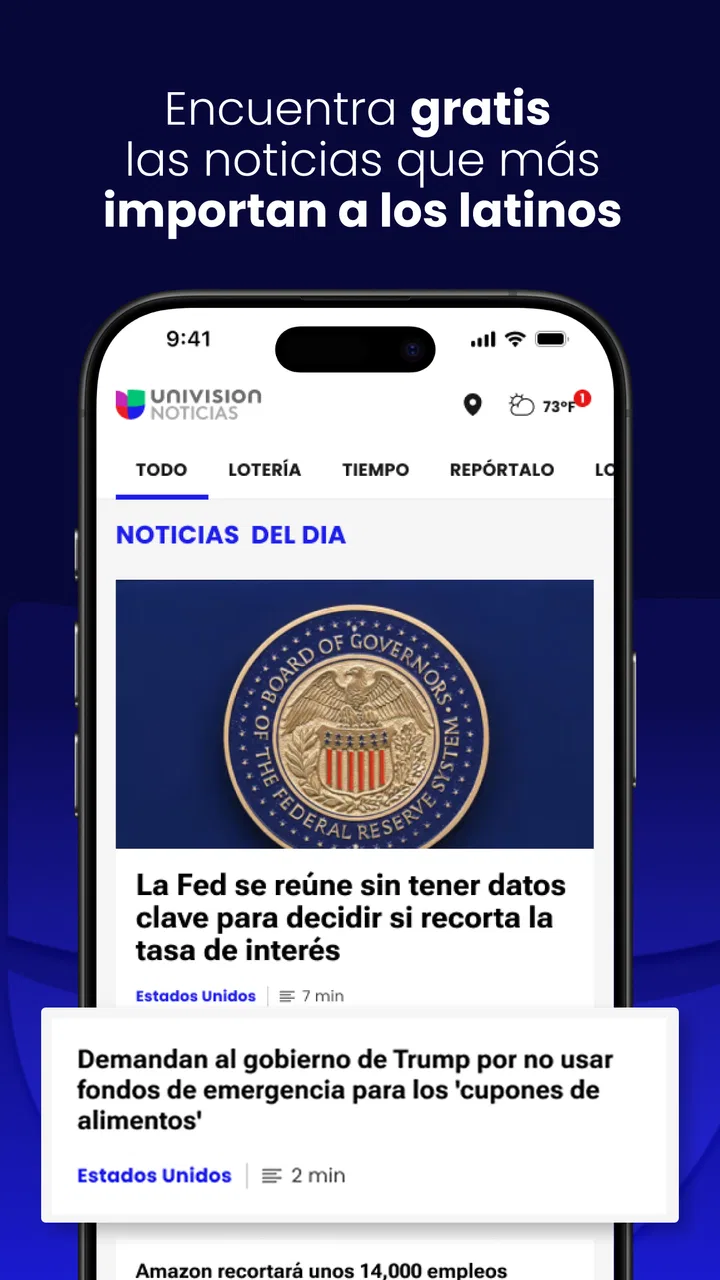
I opened Univision Noticias expecting a straightforward way to keep up with Spanish-language news, and that is exactly where it makes its strongest impression. It is a free News & Magazines app from Univision Communications Inc. focused on U.S. news, politics, immigration, the economy, health, international events, and other subjects that matter to Spanish-speaking readers. The first experience is easy to understand: launch the app, scan the current headlines, and choose the stories that deserve more time.
What interested me more than the initial convenience was whether it would still deserve a place on my phone after the novelty disappeared. News apps can be useful for a few days and then become clutter I stop opening. In my experience, this one has a clearer chance of becoming a regular habit when I want news in Spanish and want U.S. coverage framed for a Hispanic audience. It is less compelling if I already have a carefully organized collection of general news sources or if I want a completely neutral, international feed with little editorial identity.
From an easy first week to a useful news habit
During the first week, the appeal comes from the app’s focus. Instead of making me search broadly across unrelated publications, it brings together the subjects most likely to affect daily decisions: government, immigration, health, money, and events beyond the United States. That concentration saves time, especially when I want a quick update in Spanish rather than a long browsing session.
You May Also Like

 Blood Strike: 2.5 Anniversary
Blood Strike’s Loadouts Turn Every Drop Into a Tactical Gamble
A close look at Blood Strike’s custom loadouts: how fast access to signature weapons reshapes its battle royale rhythm, rewards preparation, and narrows the gap between fights.

 Pandora - Music & Podcasts
Pandora’s Music Is Easy to Start, but Harder to Recover
Pandora’s strength is its low-effort path from a seed to a station. Its weak spot is how much confidence it asks you to place in connection, setup, and quiet recovery.

 8 Ball Pool
 Is Built on Rivalries, Rematches, and Routine
A close look at the rivalries, rematches, shared routines, and unanswered safety questions that turn a quick pool match into a persistent mobile community.

 Samsung Music
’s Quiet Strength Is Playing What You Already Own
Its reach comes less from spectacle than from dependable access to a personal library. That simplicity is both the app’s strongest retention engine and its ceiling.

 AccuWeather: Weather Radar
AccuWeather Review: A Quick, Clear Forecast for Everyday Decisions
For everyday plans, the best forecast is the one you can understand quickly. AccuWeather makes rain timing, radar, and local conditions easy to act on, with a few trade-offs.

 Hill Climb Racing
Why Hill Climb Racing Still Turns Crashes Into One More Run
A tiny car, a bumpy hill and one more upgrade: Hill Climb Racing keeps resurfacing because its simple chaos makes every near-miss feel personal.
More From Our News Desk
View All News


The app also benefits from being familiar to people who already recognize Univision as a news source. I do not have to learn an unfamiliar editorial voice before deciding whether a story is relevant. The name carries a strong connection to Spanish-language television and digital journalism, while the mobile format makes the material easier to check during a commute, a lunch break, or a quiet moment at home.
One practical strength is the way the subject mix supports different kinds of readers. Someone following immigration policy may also need health or economic information, and those topics often overlap in real life. A change in public policy can affect work, family arrangements, travel, or access to services at the same time. Having those areas within the same news destination makes more sense than treating them as isolated interests.
My first-week routine would be to open it once in the morning for the main developments, then return only when a topic directly affects me. That approach works better than trying to read every headline. News apps can create the illusion that I must keep checking constantly, but this one is more useful when I treat it as a focused briefing rather than an endless obligation.
The current version is 20.0.1, and the app supports devices running at least iOS or Android 8.1, depending on the platform available to the reader. That broad compatibility makes it accessible to people who do not replace their phone frequently. I still recommend checking the device’s available store page before installing, particularly if the operating system is old, but the stated minimum is not demanding by modern standards.
Its age rating is Teen, which is reasonable for a current-events application that may cover crime, politics, conflict, immigration, and other serious subjects. I would not treat that label as a promise that every story is comfortable for younger readers. It is better understood as a reminder that news can include mature themes and emotionally difficult situations, even when the app itself is simple to navigate.
Who gets the most from the focused coverage
I see the greatest value for Spanish-speaking users in the United States who want a familiar source for domestic news without depending entirely on English-language outlets. It can also help bilingual families who share articles with relatives more comfortable reading Spanish. The language is not merely a convenience in that situation; it can determine whether a complicated policy story is understood accurately enough to discuss or act on.
The app is also a sensible choice for readers who want a broad daily scan instead of a specialist publication. A person may care about immigration one day, health the next, and the economy after that. The mixture keeps the app relevant even when one topic is quiet. That variety is more useful to me than a narrow app that becomes unnecessary whenever its single subject is not in the news.
There is a less obvious use case for people who want to compare framing. I would read a story here, then consult another reputable outlet when the issue is politically sensitive or likely to affect an important decision. The app works well as one part of a news routine, especially when its Spanish-language presentation helps me understand the basic situation before I look for additional reporting.
That last point matters because a news app should not be treated as a replacement for judgment. I would not rely on one article when completing legal paperwork, making a health decision, or responding to a rapidly changing public event. The most responsible workflow is to use the app to identify what happened, note the relevant names and terms, and then verify crucial details through official information or another established source.
Why the monthly value depends on your reading rhythm
After the first month, the question changes from “Is this convenient?” to “Does it still give me something I need?” For me, the answer depends on whether I regularly want Spanish-language U.S. coverage. If I do, the app has recurring value because the subject range matches the way real news interests move. I do not have to rebuild a reading list every time the national conversation shifts.
The free price removes one major barrier to keeping it installed. I can try it without committing to a subscription, which makes it easier to judge the app by actual use rather than by promises. That is important for news because the right choice depends heavily on personal interests, preferred language, and tolerance for frequent updates.
Its popularity also suggests that it is not an obscure experiment. The app has passed one million installs and holds a 4.7 average from roughly eighteen thousand ratings. Those figures do not prove that it will fit every reader, but they do indicate a substantial audience and a strong general reception. I would still give more weight to my own reading habits than to the rating, since a high score cannot tell me whether I prefer this editorial focus over a different one.
The monthly benefit is strongest when I use the app with a deliberate schedule. For example, I might check it before work, save the names of issues I need to understand, and avoid opening it repeatedly throughout the day. This turns the app into a tool for staying informed rather than a source of constant interruption. The same approach works particularly well for people who feel worn down by nonstop breaking-news alerts and rapidly changing headlines.
Another useful habit is to separate reading from sharing. I would first read enough to understand the context, then decide whether an article is genuinely useful to someone else. This small pause reduces the chance of passing along a headline that sounds dramatic but does not match the full story. It also helps reveal whether the app is serving my information needs or merely feeding my impulse to react.
For a reader who follows only international news, the monthly value may be weaker. The app includes world coverage, but its identity is clearly anchored in U.S. news and issues important to Hispanic communities. Someone seeking deep business analysis, local reporting from a particular city, or a highly specialized international briefing may find a dedicated publication more satisfying.
The real maintenance burden is attention, not installation
Keeping a news app useful requires more maintenance than simply leaving it on the phone. The main task is managing my attention. If I open it whenever I feel bored, the stream can become a habit of partial reading: headline, reaction, another headline, and no real understanding. I get better results when I decide in advance what I am checking for.
I would also review the app periodically and ask whether it is still covering the subjects I care about. News priorities change, and my own needs change with them. During an election period, politics may justify frequent visits. During a personal health or immigration process, those sections may matter more. At other times, a general news app may be enough for a weekly check rather than a daily routine.
Because it is free, the cost is not the difficult part of maintenance. The trade-off is that I need to decide how much of my time the app deserves. A free app can still be expensive in attention if it encourages endless checking. My recommendation is to use it as a scheduled source, mute the urge to chase every update, and keep another source available for confirmation of high-stakes information.
Storage and compatibility are also worth considering for people using older devices. The minimum operating-system requirement is 8.1, so the app is not restricted to only the newest phones. Even so, an older device may offer a less comfortable reading experience than a current one, especially if the user keeps many apps installed. That is a device-management issue rather than a reason to reject the app, but it can affect whether the experience feels smooth.
The app’s content rating of Teen creates another small maintenance responsibility for families. Parents should decide whether the news topics are suitable for a particular child instead of assuming that an age label captures every story. A teenager who is learning about current events may benefit from it, while younger readers may need an adult to explain difficult subjects or provide context.
Where fatigue begins after the novelty fades
The biggest source of fatigue is the nature of news itself. Politics, immigration, crises, and public health can be emotionally heavy, and repeated exposure may make the app feel stressful even when the reporting is useful. I sometimes need to step away from the stream, not because the app has failed, but because staying informed and staying calm are separate goals.
Another limitation is that a broad news feed cannot give every subject equal depth. A headline may be enough for a quick orientation, but readers who want extensive background, documents, data, or long-form analysis may need another source. I would not criticize the app for being a general news destination, but I would avoid expecting it to replace specialist journalism.
Editorial perspective can also influence whether the app feels trustworthy to a particular reader. Univision has a clear audience and a clear cultural context, which is a strength for readers who identify with that perspective. It may feel less suitable for someone who wants a publication with no recognizable audience focus. In my view, the sensible response is not to demand that every news app sound identical; it is to read critically and compare coverage when the stakes are high.
There is also the risk of confusing convenience with completeness. Because the app covers many important areas, I may feel informed after a short session even when I have only seen the most visible stories. I avoid that trap by asking what kind of information I actually need: a headline, a basic explanation, a local consequence, or a detailed account. The answer tells me whether to keep reading here or move to a more specialized source.
Readers who dislike frequent news exposure, prefer audio or video as their main format, or want a highly customizable feed may not find this the best long-term home. A newspaper app may offer deeper reporting, an aggregator may provide more control over sources, and a local outlet may be better for neighborhood-level information. Those alternatives are not automatically superior; they simply solve different problems.
How I would use it alongside other sources
I would place Univision Noticias near the beginning of my news routine, not at the end of it. First, I would scan the main subjects and open the stories most relevant to my family, work, or community. If an article concerns a legal deadline, medical guidance, elections, or a government action, I would then look for the original agency information or another reliable report.
This two-step method is one of the app’s most practical roles. It gives me a Spanish-language starting point and helps me identify the vocabulary needed to search further. That is especially helpful when a topic is complicated and I want to discuss it with relatives who prefer Spanish. The app becomes a bridge between awareness and deeper verification.
I would choose a general aggregator instead when I want to compare many publishers in one place or deliberately reduce the influence of a single editorial identity. I would choose a specialist publication when I need detailed financial, legal, scientific, or international analysis. I would choose a local news source when the question is about a specific neighborhood, school district, or city service. This app is strongest in the middle: broad, accessible, Spanish-language coverage of major issues with a particular U.S. and Hispanic focus.
The app’s 4.9 thousand reviews add another sign that people are engaging with it beyond a handful of downloads, while its current version shows that it remains an actively maintained product rather than an abandoned listing. I do not treat either point as a guarantee of perfect performance, but together they make the app easier to consider as a lasting utility instead of a temporary news experiment.
My long-term verdict for Spanish-language news readers
After the first-week appeal wears off, Univision Noticias earns lasting space on my phone when Spanish-language U.S. news is part of my everyday life. Its free access, broad subject coverage, and familiar editorial identity give me a practical reason to return. I especially value it as a first stop for immigration, politics, health, economic developments, and major world events that affect Spanish-speaking communities.
I would not install it expecting an all-purpose replacement for every publication. It does not remove the need for local reporting, official sources, or deeper specialist analysis. It can also become tiring if I let serious headlines dominate every spare minute. The best experience comes from setting a reading rhythm, choosing stories intentionally, and verifying important claims elsewhere.
For someone who wants a Spanish-language news habit that is easy to start and broad enough to remain relevant, I would recommend giving it a fair trial. The Teen rating is worth remembering for families, and the 8.1 minimum operating-system requirement makes it approachable for many older devices. The app’s 1M+ installs and strong average rating reinforce its position as an established choice, but the real test is personal: do its coverage and language make you return without feeling overwhelmed?
My answer is yes, with limits. I keep it for orientation, context, and a convenient connection to U.S. news in Spanish. I would pair it with other sources for depth and confirmation, but I would not dismiss it once the initial curiosity fades. Its lasting value comes from making a recurring news habit easier to maintain, not from trying to be the only source I ever need.
FAQs for Univision Noticias
01What is Univision Noticias?
Univision Noticias is a news app focused on delivering Spanish-language coverage for audiences interested in the United States, Latin America, and international events. It typically includes breaking news, politics, immigration, weather, entertainment, sports, health, and community stories. The app is designed for readers who want quick access to articles, videos, live updates, and reporting from Univision’s newsroom in one place.
02Is the Univision Noticias app free to download and use?
The Univision Noticias app is generally free to download, and much of its news content can be accessed without a subscription. However, availability may vary by region, device, and content type. Some features, such as live television streams or certain video programming, may require a participating television provider, account, or additional access. Mobile data charges can also apply when using the app away from Wi-Fi.
03What type of news and content can I find in Univision Noticias?
The app offers a broad selection of Spanish-language news, including breaking stories, U.S. national news, Latin American developments, immigration, politics, crime, weather, business, health, technology, sports, and entertainment. Depending on the current news cycle, users may also find video reports, interviews, special investigations, photo galleries, live coverage, and local stories tailored to selected cities or regions.
04Does Univision Noticias send notifications and provide live news coverage?
Yes, Univision Noticias may send push notifications about breaking news, major developments, weather alerts, and other important stories. Users can usually manage notification permissions through the app or their device settings, which is useful if they prefer fewer interruptions. Live coverage and streaming availability can depend on the event, location, internet connection, and whether authentication through a participating provider is required.
05What should I know about privacy, advertising, and app permissions?
Like many free news applications, Univision Noticias may use advertising and analytics to support the service and understand how users interact with its content. During installation or first use, the app may request permissions related to notifications, location, or media playback, depending on the features enabled. Before downloading, review the current privacy policy and store listing, since data practices and permissions may change with updates.
Pros
- Live news coverage keeps you updated on major U.S. and Latin American events.
- Spanish-language reporting is useful for bilingual households and native speakers.
- Video reports and newscasts make stories easier to follow on mobile devices.
- News categories help users quickly find politics
- immigration
- weather
- and more.
- Breaking-news alerts can deliver important updates directly to your phone.
Cons
- Some content may require a stable connection and use considerable mobile data.
- Advertising can interrupt browsing and reduce the reading experience.
- Coverage may focus heavily on U.S. Hispanic audiences and selected regions.
- Push notifications may feel frequent if many news alerts are enabled.
- Certain articles or videos may be unavailable outside supported locations.

Univision Noticias
Gallery